
Fourth-Degree Sexual Assault in Wisconsin
 Estimated Read Time: 9 Minutes
An allegation is not a final verdict, and every individual is entitled to a rigorous defense and a full presentation of the facts. While classified as a Class A Misdemeanor and not a felony, these charges can have serious repercussions on your life and future. Navigating the complexities of Wisconsin statutes requires a careful examination of both the law and the legal protections available to the accused. By grounding yourself in these details, you are transforming uncertainty into a clear, strategic roadmap. With the right information and a focused approach, you can advocate for yourself or a loved one with confidence.
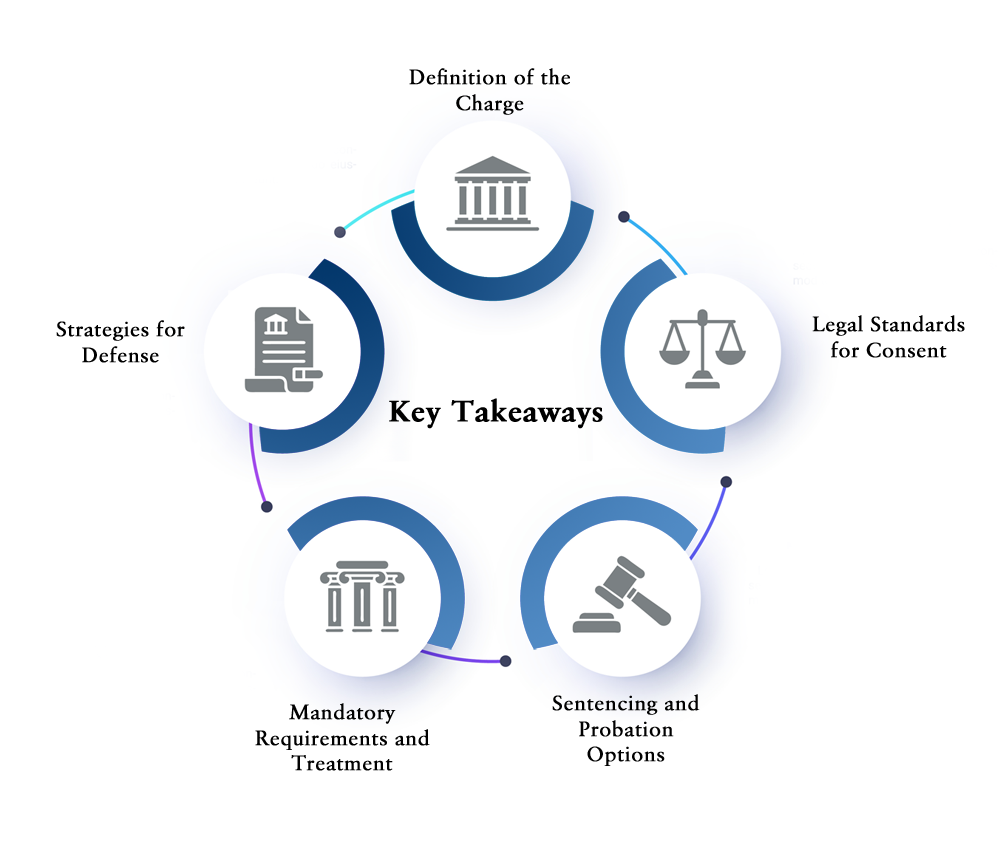
Key Takeaways
Definition of the Charge: Fourth-degree sexual assault in Wisconsin is a Class A misdemeanor involving intentional, non-consensual sexual contact, such as groping or touching intimate parts, but does not include penetration.
Legal Standards for Consent: Consent must be voluntary and overt, evidenced by clear words or actions. It is not something that can be assumed from silence, a lack of physical resistance, or the existence of a marriage.
Sentencing and Probation Options: A judge can impose up to 9 months in jail and a $10,000 fine, or choose to withhold or defer the sentence in favor of supervised probation for 1 to 2 years.
Mandatory Requirements and Treatment: Convicted individuals must provide a DNA sample and often face special conditions, such as mandatory sex offender treatment, polygraph testing, and potentially being required to join the Sex Offender Registry for 15 years.
Strategies for Defense: Charges can be challenged by raising reasonable doubt about consent, proving the contact was accidental or nonsexual, or using the “Rule of Completeness” to ensure the full context of the evidence is presented in court.
Fourth-Degree Sexual Assault
Fourth-degree sexual assault involves any non-consensual sexual contact. This charge covers a wide range of acts of non-consensual touching carried out for sexual gratification by the accused, or to sexually degrade, humiliate, or force contact for the victim. This type of deliberate contact includes groping or any intentional touching of the victim’s intimate parts, including the genitals, breasts, buttocks, or groin. Contact does not always have to be direct. It can also be through clothing to the intimate parts of either the victim’s or the defendant’s bodies.
To understand how this applies in real-world situations, consider these four distinct scenarios:
- • Scenario 1 (Groping in a public or crowded space): An individual intentionally gropes a stranger’s buttocks while standing in a crowded line at a concert venue, operating under the assumption that the crowd will mask the deliberate nature of the contact.
- • Scenario 2 (Touching over clothing): A co-worker walks up behind an employee in an office breakroom and intentionally presses their hand against the employee’s groin area over their suit pants without permission.
- • Scenario 3 (Coerced or forced contact): An individual grabs a victim’s hand and physically forces that hand onto the individual’s own genitals, using intimidation to compel the sexual contact.
- • Scenario 4 (Intent to humiliate or degrade): During an argument, an individual intentionally grabs a victim’s breasts not for sexual gratification, but specifically to assert dominance, degrade, and humiliate them in front of others.
In Wisconsin, a fourth-degree sexual assault charge involves the least amount of harm inflicted on victims. It is considered a less serious crime than first-through-third degree sexual charges, which involve more serious circumstances and increasing amounts of force and damage. A fourth-degree sexual assault charge is defined as non-consensual sexual contact.
The Definition of Verbal Consent
Under Wisconsin law, consent is defined as “words or overt actions by a person who is competent to give informed consent indicating a freely given agreement to have sexual intercourse or sexual contact.” This means that for consent to take place, there must be a voluntary affirmative agreement to any sexual encounter, and that such an agreement can never be assumed, especially in cases of intoxication.
The Meaning of Consent
Consent for sexual contact is defined by the presence of active agreement between two people rather than the absence of a verbal no. Consent cannot just be a feeling, it must be shown through clear words or overt actions that indicate a person has freely agreed to the contact. This means that if a person remains silent or simply does not fight back, the law does not view that as giving permission. For consent to be valid, it must be freely given, meaning it cannot be obtained through threats, pressure, or fear. Without this overt agreement, consent has not been given.
Consent cannot be given unless you have the mental and physical ability to do so. This means that all people involved must have the mental and physical ability to understand what is happening and make an informed choice. Under Wisconsin law, a person cannot legally consent if they are unconscious, asleep, or so intoxicated that they cannot understand or communicate. If someone is in that state, any sexual contact is automatically considered to be without consent under the law. Additionally, consent is not permanent. Think of it as a liquid state where a person can change their mind and withdraw their agreement at any point, and any contact that continues after that is considered a violation.
At any level of sexual contact, a failure to resist is not consent. Again, an overt agreement is necessary, and in cases of sexual assault, the law does not require a victim to physically fight back or scream to prove they didn’t want the contact. In the case of the prosecution, the burden will be on the state to prove there was no active agreement, not on the victim to prove they resisted.
Mistake of Fact Doctrine
This doctrine is a legal defense in which a defendant argues that they committed an act because they were honestly mistaken about a specific fact. If the law requires you to intend to break a specific rule for you to be held liable, but you reasonably thought you were following it because of a factual error, you might not be held criminally responsible. For example, if you walk out of a cafe with an umbrella you honestly believe is yours because it looks identical, you haven’t intentionally stolen any property.
Despite this general rule, Wisconsin is very firm that a mistake of fact cannot be used as a defense for certain crimes, most notably sexual assault. The state does not require the prosecution to prove that a defendant knew the victim was not consenting. Instead, the focus is entirely on whether the victim actually gave consent through words or overt actions. A defendant’s mistaken belief that consent existed is usually considered to be irrelevant. Even if the defendant’s belief was reasonable, it does not cancel out the fact that the crime occurred if the victim did not actually agree.
Sexual Assault Between Spouses
In Wisconsin, being married does not change the law regarding sexual consent. As with any other individual, you must have your spouse’s explicit permission for any sexual contact. This is equally true of marriage, which cannot be used as a defense or an excuse for sexual assault. Since consent means there is an active agreement shown through words or actions, you cannot assume your spouse is consenting just because you are married, or because they are silent or not physically resisting. For example, if your spouse is asleep, unconscious, or too intoxicated to understand what is happening, they are legally unable to give consent. Furthermore, consent can be taken back at any time; if a spouse says “no” or indicates they want to stop, any further contact is a violation of the law.
If a person is convicted of fourth-degree sexual assault against their spouse, they face the same penalties as a Class A Misdemeanor. Because this crime involves a spouse, it is often treated as a domestic abuse incident, which can lead to a mandatory no-contact order and may result in a permanent ban on owning firearms. While registration on the Sex Offender Registry is not automatic for this specific misdemeanor, a judge has the power to require it if they believe the act was sexually motivated or that registration is necessary to protect the public. Should this action lead to divorce, it is essential to remember that this conviction can stay on a person’s permanent criminal record and potentially affect child custody agreements.
The Age of Consent
The legal age of consent is 18. This means that anyone under 18 is considered a child and is not capable of giving informed consent to sexual activity. It does not matter if the younger person said yes, initiated the contact, or even lied about their age. If an adult has sexual contact or intercourse with a minor, it is a crime, and claiming you honestly thought they were an adult is not a valid legal defense in Wisconsin.
Punishment for sexual contact with a minor will vary depending on how old the child is. The seriousness of the sentence depends mainly on the child’s age. If the person is 16 or 17, the law is slightly less severe, usually treating the act as a Class A misdemeanor punishable by up to nine months in jail. Wisconsin also has a specific rule for teenagers close in age. If the older person is under 19 and the younger person is at least 15, the charge is kept as a misdemeanor, and the judge has the choice to spare the teenager from having to sign the sex offender registry. Things escalate dramatically if the minor is younger. If the child is under 13, it is treated as a grave Class B felony that can lead to 60 years in prison. For children aged 13 to 15, it is a Class C felony.
 The Difference Between Sexual Contact and Sexual Intercourse
The difference in actions between sexual contact and sexual intercourse typically determines whether a person is charged with a misdemeanor or a serious felony. The key distinction is that fourth-degree sexual assault is fundamentally a non-penetrative sexual crime, while third-degree sexual assault involves non-consensual penetration or specific high-level non-consensual contact.
Sexual contact, which is the basis for a fourth-degree sexual assault charge, is defined as any intentional touching of a person’s intimate parts—including the breast, buttock, anus, groin, scrotum, penis, vagina, or pubic mound. This touching can be done directly against the skin or through clothing, and it must be done for the purpose of sexual arousal, gratification, bodily harm, or to humiliate or degrade the victim. Fourth-degree sexual assault generally covers non-consensual touching that does not involve any kind of physical penetration.
In contrast, sexual intercourse immediately elevates the offense to a third-degree sexual assault charge, which is a serious felony. Under the law, the act of penetration is broadly defined to cover several actions, including vulvar penetration, cunnilingus, fellatio, anal intercourse, or any other intrusion, however slight, of any body part or object into the victim’s oral, genital, or anal openings. It does not matter if there was a semen emission or not—if the penetration occurred, it constitutes sexual intercourse. (Note: The law also elevates the charge to third-degree sexual assault without penetration if the act involves the non-consensual, intentional ejaculation of semen or emission of bodily fluids onto the victim for the purpose of arousal, humiliation, or degradation).
Hypothetical Examples
- • Scenario A (Fourth-Degree Sexual Assault): During an argument at a crowded venue, an individual intentionally and forcefully grabs an acquaintance’s buttocks over their jeans without consent, making a degrading comment. Because the touching involved a statutorily defined intimate part through clothing for the purpose of humiliation or arousal, but did not involve physical penetration or emission of fluids, this action constitutes sexual contact and would typically be charged as a misdemeanor fourth-degree sexual assault.
- • Scenario B (Third-Degree Sexual Assault): During a date, an individual engages in non-consensual digital penetration (using a finger) of a victim’s genital opening. Even if the act lasted only a few seconds, resulted in no physical injury, and involved no ejaculation or traditional intercourse, the law broadly defines any slight intrusion of a body part into a genital opening as sexual intercourse. This immediately elevates the offense to a felony third-degree sexual assault.
Under the law, the specific gender of the perpetrator or the victim—whether the act is man-on-woman, woman-on-man, man-on-man, or woman-on-woman—does not change the legal definitions of sexual contact or sexual intercourse, nor does it alter the severity of the charges. The statutory language is entirely gender-neutral
Consequences of a Fourth-Degree Sexual Assault Charge
Sentencing for fourth-degree sexual assault involves a judge deciding on a combination of jail time, fines, and supervision based on the specific facts of your case. Because this charge is a Class A misdemeanor, the legal maximum punishment is nine months in jail and a fine of up to $10,000.00. The judge can order either or both of these penalties. Additionally, if the assault involved a family member or partner, a mandatory $100 domestic abuse surcharge is added to the overall costs.
When deciding how to hand down a sentence, a judge usually chooses among three paths. A judge may order you to serve the entirety of your sentence in jail. Alternatively, they can withhold your sentence. This means they will refrain from issuing a sentence at this time, instead placing you on probation. If you fail probation for any reason, you will have to come back to court to be sentenced for the first time. The third option is a stayed sentence, where the judge sets a specific jail term but pauses it to allow the person to try probation. If you fail, you will go straight to jail for that particular amount of time. Regardless of the jail time, you will be ordered to provide a DNA sample for the state’s database and pay a $200 fee to cover it. Depending on the circumstances of your crime, you might be ordered to pay restitution to cover the victim’s medical or counseling bills.
One of the most important parts of the sentencing is a special hearing to decide if the person must join the Sex Offender Registry. This is not automatic for a fourth-degree charge. The judge must specifically determine whether the crime was sexually motivated and if the public needs to be protected. If the judge orders it, the person must register for 15 years, during which their photo and address are public. To make the final decision on all these factors, Wisconsin judges follow the Gallion standard, which requires them to weigh the seriousness of the crime, the person’s character and record, and the safety of the community.
There is a distinctive public stigma to being added to the Sex Offender Registry. It can bar you from living in certain neighborhoods or disqualify you from any job involving children, healthcare, or government service.
Life as a Sex Offender
The impact of placement on the registry cannot be overstated. As a result of your status on the registry, you are subject to a mandatory and strictly regulated set of requirements under Wisconsin law.
Reporting Timelines: Active vs. Off Supervision
Your specific reporting requirements depend heavily on whether you are currently being supervised by an agent.
If you are on active probation or parole, you must report updates before they occur. For instance, if you obtain a new job or plan to move to a new residence, you cannot wait until your first day of work or move-in date to notify your agent. Instead, you must obtain approval before making the change.
If you are no longer under supervision, you must report any change to your residence, employment, school enrollment, or digital identifiers within a strict 10-day window. This means that if you create a new Gmail account, begin driving for a rideshare company, or enroll in a night class at a local college, the clock starts immediately. You have exactly 10 days from the date of the change to report it to the registry.
Consequences and Public Visibility
Failing to maintain these required updates is a Class H felony punishable by up to six years in prison. Your life and criminal conviction will remain in the public eye for at least 15 years. Information about you, including a photograph and your address, will be published on a publicly accessible website. As a result, neighbors, landlords, employers, and anyone who searches your name online may be able to view your registry profile, photograph, and residential address at any time.
Additional Restrictions
A number of additional restrictions accompany sex offender registration. Depending on the circumstances, you may be legally prohibited from working or volunteering in positions that involve contact with children under 16. This could prevent you from coaching a youth sports team, volunteering at certain church or community events, or working in positions that regularly involve interaction with children.
Furthermore, you cannot change your name without complying with specific legal requirements and registry notification procedures. Even after marriage or for personal reasons, a legal name change may require additional state approval and registry updates.
Finally, you may be required to notify school administrators before entering school property. If you need to attend a parent-teacher conference, drop off an item for a family member, or attend a public event at a local school, you may be required to contact school administrators beforehand and comply with applicable notification requirements.
Fourth-Degree Sexual Assault and Domestic Abuse
If the offense involves a spouse, cohabitant, former intimate partner, or someone the defendant shares a child with, the state may apply a domestic abuse modifier to the charge. This triggers a mandatory domestic abuse surcharge added directly to any court-ordered fines. It also frequently results in a formal No-Contact Order, which can legally prohibit the accused from returning home, contacting the alleged victim, or communicating through phone calls, text messages, social media, third parties, or any other means.
For example, a husband charged after an argument with his wife may be ordered to leave the family home immediately and have no contact with her while the case is pending. A boyfriend accused of an offense involving a live-in girlfriend could be prohibited from returning to the residence even if his name is on the lease. A parent accused of an offense involving the other parent of their child may face restrictions that complicate custody exchanges and family communication.
Additionally, a domestic violence conviction can place your Second Amendment rights in severe jeopardy. Under federal law, a misdemeanor conviction that involves the use or attempted use of physical force against a qualifying domestic partner can trigger a lifetime prohibition on possessing firearms or ammunition.
For example, a person who legally owns hunting rifles, carries a firearm for personal protection, or works in a profession that requires firearm possession could lose those rights permanently following a qualifying domestic violence conviction, even if the offense was classified as a misdemeanor and no weapon was involved in the incident.
Fourth-Degree Sexual Assault FAQs:
Is this a felony or a misdemeanor? It is a Class A Misdemeanor, which is the most serious category of misdemeanor in Wisconsin.
Will I have to register as a sex offender? Registration is not automatic for this charge. A judge only orders it if they believe the act was sexually motivated and that registration is necessary to protect the public.
How long does the state have to charge me? Generally, the statute of limitations for a misdemeanor in Wisconsin is three years.
Does it count as assault if the people are married? Yes. In Wisconsin, being married is not a legal defense for sexual assault. Every person has the right to refuse sexual contact, regardless of their relationship status with the other person.
What is the difference between contact and intercourse? Fourth-degree sexual assault involves contact, which means touching intimate parts over or under clothing. If there is any penetration, the charge is usually upgraded to a higher degree, which is a felony.
What Are Common Reductions for Fourth-Degree Sexual Assault Charges in Wisconsin?
The most common negotiated reduction from a Fourth-Degree Sexual Assault charge in Wisconsin is Disorderly Conduct. Other common alternatives include Harassment and, in some cases, Battery, depending on the facts of the case. These reductions can be extremely valuable because they eliminate the sexual assault conviction and the stigma that comes with being labeled a sex offender. Unlike a sexual assault conviction, these offenses generally do not require sex offender registration and may have fewer long-term consequences for employment, housing, education, professional licensing, and reputation.
Probation Sentence for a Fourth Degree Sexual Assault Charge
Instead of mandatory jail time, a judge might choose a probation sentence to monitor a person in the community rather than incarcerate them. A judge can put a jail sentence on hold and place you on probation for a period that will usually last between one and two years. During this time, you will be under supervision by a probation agent from the Department of Corrections. You will be instructed to follow a specific set of rules, which include meeting with your agent regularly, keeping a job, staying in a pre-approved home, and asking for permission before leaving the county or the state. You will be required to strictly obey all laws and to report any police contact to your agent within 24 hours.
Because the crime is a sexual offense, the judge and the probation agent will often add special conditions to your probation that are much more restrictive. These frequently include a total ban on contacting the victim, mandatory and self-paid sex offender treatment or counseling, and a ban on drinking alcohol or going into bars. Some people may even be required to take lie detector tests as part of their treatment. It is also important to know that a judge can order a person to serve up to 90 days in jail at the very start of their probation before they are allowed to go home.
If any of these rules are broken, even a small rule like missing a meeting or moving without permission, the state can start a process called revocation. If you are found to have violated your probation, your grace period ends. For example, if the judge had already set a jail sentence for a period of 6 months and put it on hold, you will now go straight to jail to serve that time. If the judge had withheld the sentence, they could now order any amount of jail time up to the maximum of nine months allowed for a fourth-degree charge.
Sex Offender Treatment and Counseling (Wisconsin)
When someone is placed on probation for a sexually motivated offense, such as fourth-degree sexual assault where the court explicitly orders sex offender registration and supervision rules, the Department of Corrections routinely requires them to complete specialized treatment. This is a mandatory condition of supervision directly tied to the probationary sentence. If an individual refuses to attend or is unsuccessfully discharged from the program, it is treated as a major violation. Their probation can be revoked, resulting in either the activation of a previously stayed county jail sentence or a return to court for sentencing if the original sentence was withheld.
The primary framework for counseling is a specialized Sex Offender Treatment Program (SOTP), which heavily relies on group therapy. These sessions utilize cognitive-behavioral therapy to help individuals identify cognitive distortions, or “thinking errors,” and develop a comprehensive safety plan to prevent future offenses. Under Wisconsin Administrative Code, the individual is required to pay out of pocket for the full cost of this specialized treatment and polygraph testing, unless they meet specific legal exemptions, such as being verified by their agent as indigent and incapable of paying.
Another standard requirement under Wisconsin’s Containment Model of supervision is the use of polygraph tests. A probation agent utilizes these tests to monitor compliance with rules and to ensure the individual is being entirely honest about their past behavior and compliance during therapy. While polygraph results themselves are legally inadmissible as evidence in a criminal trial, an outright refusal to take a scheduled test is a violation of Chapter DOC 332 and can be grounds for revoking probation. However, a probationer cannot legally be revoked solely because a machine indicates deception; rather, failing a test prompts a deeper investigation, and revocation occurs only if the individual admits to a rule violation or if independent evidence confirms it. Additionally, if alcohol or drugs were involved in the offense—or to mitigate overall risk—the court will mandate an Alcohol and Other Drug Abuse (AODA) assessment. Depending on the results, the individual must undergo random drug or alcohol testing and may be required to attend community support groups like AA or NA.
Before treatment begins, individuals undergo a comprehensive psychological evaluation utilizing standardized actuarial tools to assess their risk of reoffending. This risk rating directly determines the intensity of the probation officer’s supervision and the density of the treatment curriculum. However, completion of the program is competency-based rather than time-based; an individual graduates only when providers determine they have successfully internalized the concepts and mastered their offense-prevention plan. All of these steps are designed to hold the individual accountable and manage risk while they remain in the community.
 Financial Consequences for a Fourth-Degree Sexual Assault Charge
A conviction for Fourth-Degree Sexual Assault in Wisconsin carries severe, compounding financial consequences that extend far beyond the initial penalty. As a Class A Misdemeanor, the offense allows a presiding judge to impose a discretionary base fine of up to $10,000. However, this fine is merely the starting point for a rigid network of mandatory statutory fees that apply automatically upon conviction. First, a 26% Penalty Surcharge is added directly to any imposed base fine. Regardless of whether a fine is set, every single count automatically triggers a $200.00 DNA Analysis Surcharge, a $67.00 Crime Victim and Witness Surcharge, and a $100.00 Sexual Assault Surcharge. Standard court operations further inflate the balance, adding $163.00 in base misdemeanor court costs, a $21.50 Justice Information System Surcharge, and a $13.00 Crime Laboratories assessment. Additionally, a mandatory Jail Surcharge adds either a $10.00 minimum or 1% of the imposed fine, whichever is greater. If the court orders victim restitution for medical or counseling expenses, the state attaches an additional 5% administrative surcharge to the entire combined total of all fines, fees, and restitution obligations. Finally, while registration on the Wisconsin Sex Offender Registry is not automatic for this misdemeanor, the sentencing judge retains the discretion to mandate it, introducing immense long-term economic collateral consequences through severe restrictions on housing and employment.
The practical accumulation of these fees is best understood through three distinct sentencing scenarios. In a minimum baseline scenario involving a first-time offender with no base fine and no ordered restitution, the mandatory flat fees alone create an inescapable out-of-pocket court balance of $574.50. In a moderate scenario where a judge imposes a mid-range fine of $1,500.00 and orders $2,500.00 in victim restitution, the 26% penalty surcharge adds $390.00, the jail surcharge scales to $15.00, and the mandatory flat assessments bring the pre-surcharge subtotal to $4,969.50; applying the 5% administrative restitution surcharge adds $248.48, resulting in a true out-of-pocket grand total of $5,217.98. In a maximum penalty scenario driven by aggravating circumstances, the judge may impose the statutory limit of a $10,000.00 base fine. Even without victim restitution, this maximum fine heavily inflates the percentage-based assessments, triggering a $2,600.00 penalty surcharge and a $100.00 jail surcharge alongside the $564.50 in flat court fees, culminating in a devastating final judgment of $13,264.50.
Restitution
As a part of your sentence, you might be ordered to pay restitution to the victim for any money lost as a direct result of the crime. This money is separate from any fines that the court will issue as a part of your sentence. Restitution seeks to make the victim whole by covering documented expenses, including medical bills, hospital visits, forensic exams, and counselling sessions. It can also cover lost wages and the cost of repairing or replacing property damaged during the incident. In some cases, it may even cover the cost of changing locks or moving if the victim no longer feels safe.
The process for determining the restitution amount starts at the sentencing hearing, where the victim provides receipts or bills to prove their losses. If there is a disagreement over this amount, you have the legal right to a Restitution Hearing, where a judge listens to the evidence and decides what is fair. While the judge must consider your ability to pay when setting a payment schedule, the full amount is still usually ordered. Satisfying the payment of this amount on time will be a mandatory part of your probation. The Department of Corrections typically collects the payments and adds a 10% surcharge to cover processing costs.
If the probation period ends and the restitution remains unpaid in full, the remaining balance will be entered as a civil judgment. This is a serious legal debt that can appear on a credit report and allows the victim to pursue other legal remedies to get paid, such as garnishing the defendant’s paycheck or placing a lien on their property. Because of this, restitution is often a long-term financial obligation that lasts well after the criminal case is technically over.
Challenging the Charges: Defending Against Fourth-Degree Sexual Assault
To secure a conviction for Fourth-Degree Sexual Assault under Wisconsin law, the prosecution must prove two primary elements beyond a reasonable doubt: that sexual contact occurred, and that it happened without the victim’s consent. A comprehensive defense strategy focuses on examining the evidence to establish reasonable doubt by demonstrating that the State has failed to meet this high burden of proof.
Depending on the unique facts of the case, several legal avenues can be pursued to challenge the accusations.
1. Challenging Consent and Applying the Rule of Completeness
The most common defense in these cases is demonstrating that the contact was consensual. To challenge the prosecution’s claim of non-consent, a defense team will meticulously analyze text messages, social media records, and witness statements to clarify the nature of the interaction. Furthermore, prior statements made by the alleged victim to law enforcement or peers must be thoroughly scrutinized for inconsistencies.
In modern defense, the Rule of Completeness serves as a vital legal protection against misleading, cherry-picked evidence. If the prosecution introduces only a snippet of a conversation, text thread, or recorded statement, the defense has the right to insist that the remainder of that communication be introduced simultaneously.
Because sexual encounters often involve extended dialogues across platforms like Snapchat or Instagram, a single sentence can be easily taken out of context. For example, if the prosecution introduces a text where a defendant states, “I feel bad about what happened,” the defense can invoke this rule to show the full conversation, which may reveal the defendant was actually referring to a completely different, non-criminal event. This rule ensures the judge or jury hears the complete narrative rather than a distorted version of the facts.
2. Contesting Intent and the Purpose of the Contact
Another robust defense strategy focuses on the intent behind the alleged touch. Under Wisconsin law, the State must prove that the contact was intentionally made for a specific statutory purpose: sexual arousal, sexual gratification, humiliation, degradation, or to cause bodily harm to the victim. If the contact was inadvertent, incidental, or completely unrelated to these statutory purposes, an essential element of the offense cannot be proven.
Accidental or non-sexual contact can occur in numerous everyday scenarios:
- • Crowded Spaces: Accidentally brushing against someone while navigating a packed concert, bar, or sporting event.
- • Loss of Balance: Unintentionally touching another person while stumbling or trying to prevent a fall.
- • Legitimate Purposes: Contact that is reasonably related to professional care, such as medical treatment, caregiving, athletic training, or emergency assistance.
- • Physical Altercations: Incidental contact that occurs during a chaotic, non-sexual struggle or fight.
When the evidence demonstrates that the contact lacked the required legal intent, the defense can successfully argue that the State has failed to establish legal “sexual contact.”
3. Reviewing the Legal Definition of “Intimate Parts”
Wisconsin law enforces a strict, exclusive list of what qualifies as an “intimate part.” If the investigation reveals that the alleged contact occurred on an area of the body not included on this statutory list—such as a shoulder, back, or outer thigh—the legal definition of sexual assault is simply not met. Under these circumstances, the defense can move to have the charges dismissed entirely.
4. Evaluating Police Conduct and Constitutional Violations
A strong defense also relies on a strict audit of how law enforcement handled the investigation. If the police conducted searches of a phone, vehicle, or residence without a valid warrant or a lawful exception, that evidence may be suppressed under the Fourth Amendment. Additionally, if a defendant was subjected to custodial interrogation without being properly advised of their Miranda rights, any resulting statements must be excluded from court.
Alternative Defenses to Fourth-Degree Sexual Assault
Depending on the specific circumstances of the case, additional legal defenses may include:
- • False Allegation: Demonstrating a motive for fabrication or lack of credibility.
- • Misidentification: Establishing that the defendant was not the individual involved (e.g., an alibi defense).
- • No Sexual Contact Occurred: Proving that the alleged physical interaction never took place.
- • Lack of Corroborating Evidence: Highlighting the absence of physical, forensic, or digital evidence to support the accusation.
Ultimately, a defense attorney will tailor these arguments to the specific facts of the case to expose gaps in the prosecution’s narrative and protect the defendant’s constitutional rights.
 Preparing to Win Your Fourth-Degree Sexual Assault Case
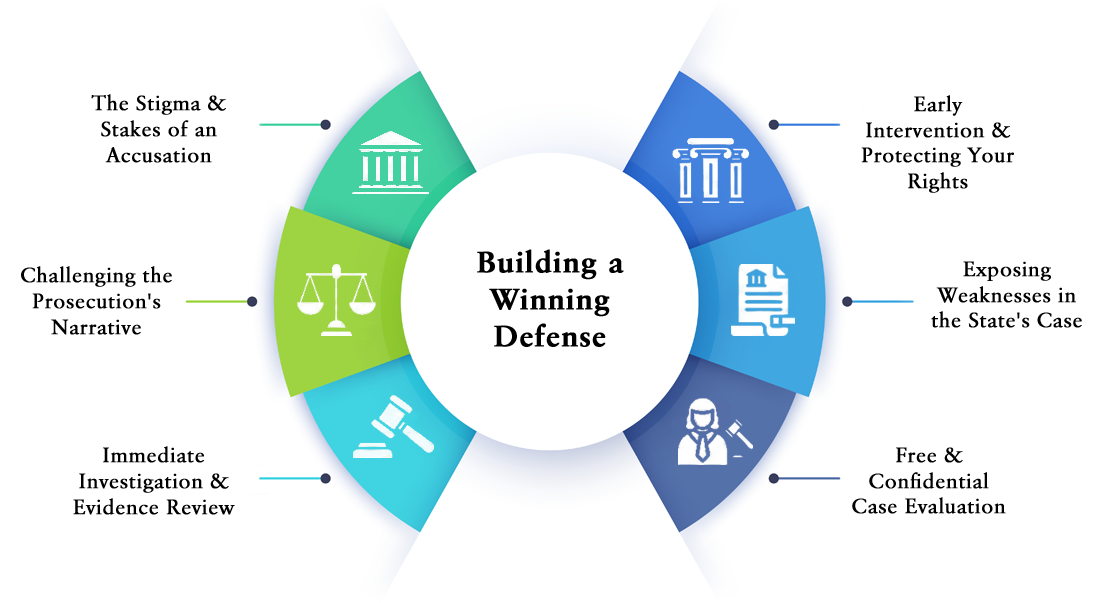
A Fourth-Degree Sexual Assault accusation may be classified as a misdemeanor in Wisconsin, but the consequences can be life-changing. Few criminal allegations carry the same stigma and lasting damage as being labeled a sex offender. Even before a judge or jury hears the evidence, many people assume guilt simply because of the nature of the accusation. In many ways, a sexual assault allegation comes with a modern-day scarlet letter that can impact your reputation, career, relationships, and standing in the community.
Because of this built-in bias, defending a Fourth-Degree Sexual Assault case requires far more than simply responding to the allegations. It requires preparation. Prosecutors understand the emotional weight these accusations carry and often build their cases around a narrative designed to make the accused appear dangerous, inappropriate, or predatory. A successful defense must be prepared to challenge that narrative with facts, evidence, and credibility.
At Tracey Wood & Associates, preparation begins immediately. The defense team investigates the allegations, identifies favorable witnesses, reviews electronic communications, examines inconsistencies in statements, and uncovers evidence that may support innocence or create reasonable doubt. In many Fourth-Degree Sexual Assault cases, the central issue is not forensic evidence but credibility. These cases frequently come down to competing versions of events, misunderstandings, mistaken assumptions, or allegations that cannot be independently verified.
Early intervention can be especially important. If law enforcement contacts you and asks you to come to the station or provide a statement, you should strongly consider speaking with an attorney first. Charges may not have been filed, and what you say during an investigation can significantly impact whether prosecutors decide to move forward. Having an experienced defense attorney involved from the beginning helps protect your rights and prevents investigators from obtaining statements that may later be taken out of context.
Winning a Fourth-Degree Sexual Assault case is rarely about luck. It comes from understanding every detail of the accusation, exposing weaknesses in the State’s evidence, and presenting a clear and truthful explanation of what actually occurred. When the defense is thoroughly prepared and the facts are properly presented, reasonable doubt often follows.
Tracey Wood & Associates offers free and confidential case evaluations for individuals facing Fourth-Degree Sexual Assault allegations. During this meeting, you can discuss your situation, learn about potential defenses, and gain a better understanding of what lies ahead. The consultation is protected by attorney-client privilege, carries no obligation, and provides an opportunity to determine whether the firm is the right fit to protect your future and reputation. It also allows you to understand your legal options and develop a strategy aimed at achieving the best possible outcome — whether that means a dismissal, a reduction of the charge, or a full acquittal at trial.
Call (608) 490-5779 or Schedule a Free Case Evaluation Online
Contact Us
Footer
Locations
Headquarters, Main Office, and Mailing Address
Tracey Wood & Associates
6605 University Avenue
Suite 101
Middleton, WI 53562
Downtown Office

Tracey Wood & Associates
345 West Washington Avenue
Suite 328
Madison, WI 53703
Tracey Wood & Associates
6605 University Avenue
Suite 101
Middleton, WI 53562
Downtown Office
Tracey Wood & Associates
345 West Washington Avenue
Suite 328
Madison, WI 53703