
Third-Degree Sexual Assault in Wisconsin
 Estimated Read Time: 11-12 Minutes
Navigating the complexities of Wisconsin’s legal system requires a steady hand and a clear perspective, and having this detailed knowledge at your fingertips is the first step toward taking control of the situation. By breaking down the specific degrees of charges, the nuances of truth-in-sentencing, and the availability of alternative paths like probation, you are now equipped with a powerful roadmap to understand exactly how the law operates. This transparency transforms a daunting process into a series of manageable, factual steps, allowing you to move forward with the confidence that you are informed, prepared, and grounded in the actual statutes that govern these proceedings.
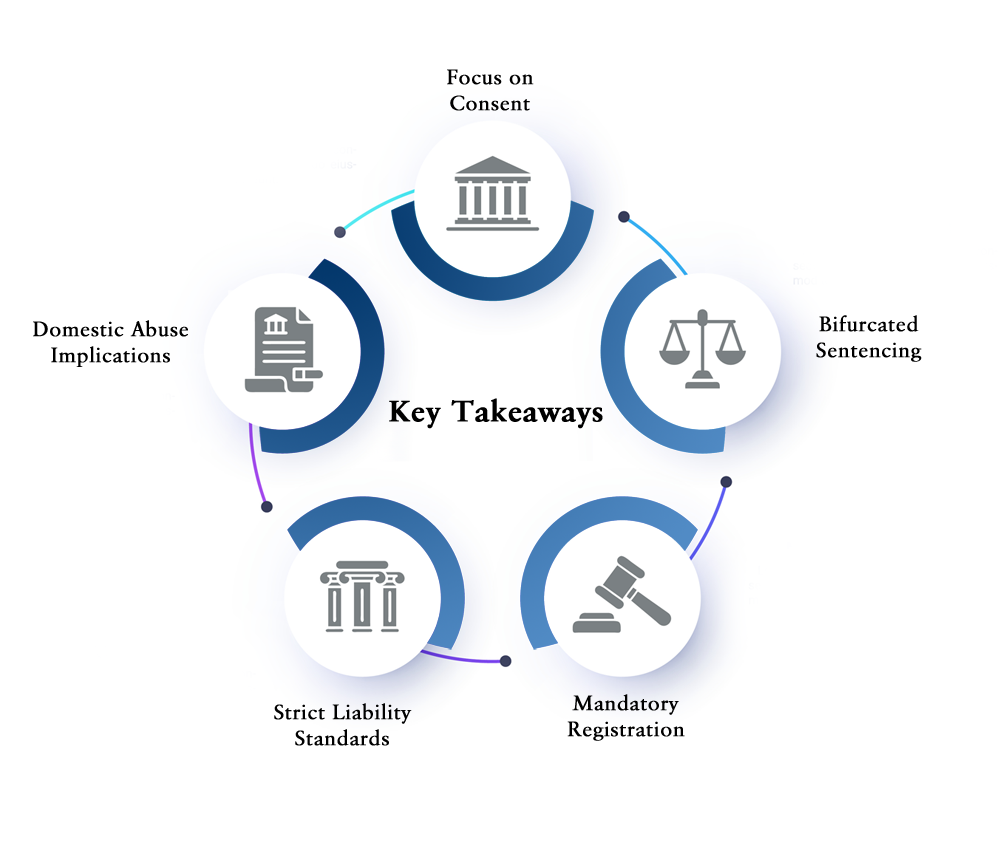
Key Takeaways
Focus on Consent: This serious felony centers on the lack of consent, meaning the state does not have to prove the use of physical force, weapons, or injury.
Bifurcated Sentencing: A conviction for a Class G felony can result in up to 10 years of imprisonment, split between five years of initial confinement and five years of strict community supervision.
Mandatory Registration: Convicted individuals must register with the Wisconsin Sex Offender Registry, a public tool that typically requires a 15-year commitment but can extend to a lifetime.
Strict Liability Standards: Wisconsin law does not allow mistake of fact or mistake of age as legal defenses. Instead, adults are held strictly responsible for ensuring their partner is of age and has given informed consent.
Domestic Abuse Implications: If the assault involves a spouse or roommate, it is legally labeled domestic abuse, triggering mandatory arrest laws, an automatic 72-hour no-contact order, and a firearm ban.
Third-Degree Sexual Assault Explained
Third-degree sexual assault under Wisconsin law is a serious felony. While the broader law covers specific, narrow forms of non-consensual sexual contact involving the emission of bodily fluids, the offense is most commonly prosecuted when a person engages in sexual intercourse with another person without that person’s consent. Unlike first- or second-degree charges, a third-degree conviction does not require the prosecution to prove aggravating factors, such as the use of a dangerous weapon, the infliction of bodily harm, or that the act occurred through force or violence. Instead, the state must prove two core elements beyond a reasonable doubt: that sexual intercourse occurred and that it occurred without consent.
Wisconsin law defines “sexual intercourse” broadly. It includes cunnilingus, fellatio, anal intercourse, or any other intrusion, however slight, of any part of a person’s body or of any object into the genital or anal opening.
Under Wisconsin law, consent requires words or overt actions by a person competent to give informed consent, indicating a freely given agreement to engage in sexual activity. While the law allows for nonverbal actions to signal agreement, relying solely on nonverbal cues carries significant legal risk. If a jury determines those signals did not amount to a clear agreement, the absence of consent is established.
Crucially, Wisconsin law does not require a person to physically resist or verbally say “no” for an act to be nonconsensual. The absence of physical resistance does not establish consent. For example, if two adults voluntarily begin an intimate encounter, but one person later communicates through words or actions that they wish to stop, continuing the encounter after consent is withdrawn constitutes sexual intercourse without consent.
The legal significance of establishing actual consent is amplified by how Wisconsin courts handle a defendant’s state of mind in third-degree prosecutions. The third-degree sexual assault statute does not require the prosecution to prove that the defendant knew the victim was not consenting. Because this specific law lacks a “knowledge” or “intent” requirement regarding the lack of consent, a defendant’s genuine or mistaken belief that the other person was willing is generally not a valid legal defense if a jury finds that actual consent was absent.
It is also critical to understand that consent must be given by someone who is legally competent to do so. Under Wisconsin law, a person who is unconscious or so intoxicated that they are incapable of appraising their conduct or communicating unwillingness is legally incapable of giving consent. However, engaging in sexual intercourse with someone known to be unconscious or incapacitated generally falls outside the scope of third-degree sexual assault and may instead constitute second-degree sexual assault, which carries more severe penalties and requires proof of the additional statutory elements applicable to that offense. Therefore, under the third-degree standard, a clear, competent, and freely given agreement remains the only legally reliable benchmark for consent.
Mistake of Fact Doctrine
The mistake of fact doctrine is largely unavailable as a defense for third-degree sexual assault, since an honest error of fact is generally a defense only if it negates the criminal intention that is an essential element of the crime. Because third-degree sexual assault involves the victim’s lack of consent, a defendant’s mistaken belief that the victim was consenting is typically legally irrelevant.
This legal framework places the entire burden of ensuring consent on the person initiating the sexual act. While some states allow a reasonable mistake-of-fact defense, Wisconsin does not. Instead, the jury is instructed to consider only whether the victim’s words or actions express consent. Consequently, a defendant’s subjective misunderstanding or mistake does not provide a shield against a conviction for this felony.
Sexual Assault Between Spouses
The relationship between a husband and wife provides no immunity or special defense against sexual assault charges. Instead, the law explicitly states that a person may be guilty of sexual assault even if the victim is their legal spouse. This means that a third-degree sexual assault charge between spouses is treated with the same legal weight and follows the same rules as a charge between strangers or acquaintances.
The core of a third-degree sexual assault charge between spouses remains the lack of consent. In a marriage, consent is not considered automatic or permanent. Every individual act of sexual intercourse requires a freely given agreement through words or overt actions. If one spouse has intercourse with the other without that clear agreement, it meets the statutory definition of the crime. A spouse’s belief that they had a right to intimacy or a mistake in reading their partner’s willingness does not serve as a legal defense.
While the long-term nature of a marriage may lead to more overt actions and non-verbal cues than a new relationship, the law still requires that those actions indicate consent. If a spouse submits out of fear, or if there is simply no positive indication of agreement, the same rules typically apply.
 The Age of Consent
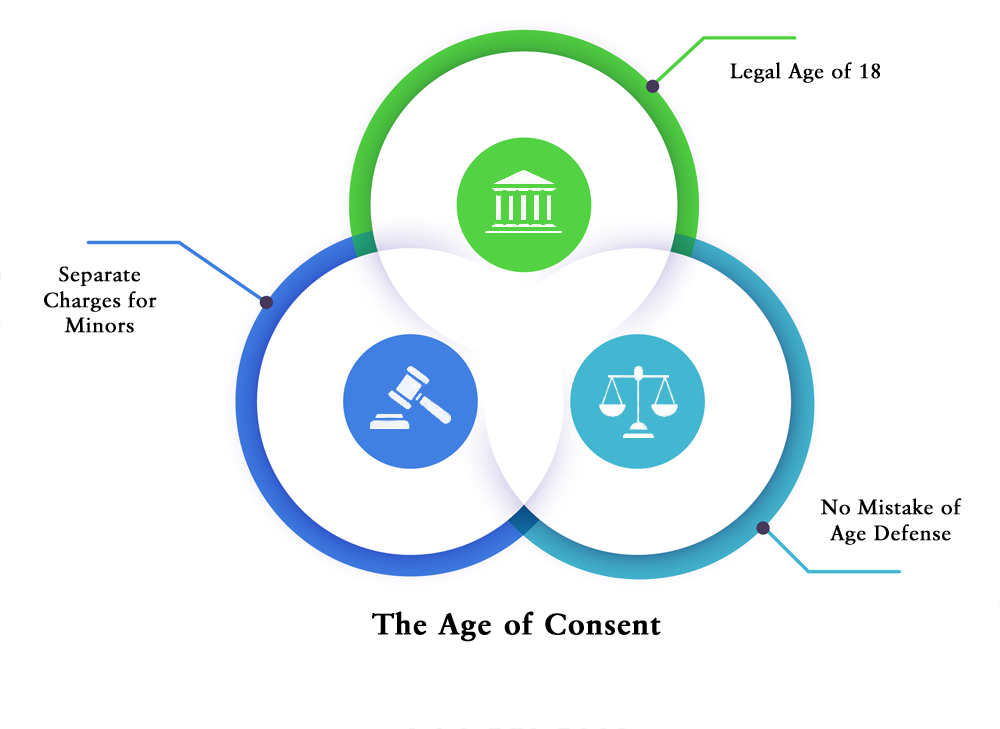
The rules surrounding the age of consent and third-degree sexual assault work together to protect minors, but they are found in different parts of the law. The legal age of consent in Wisconsin is 18, and because anyone under 18 is legally considered a child under the law, they are seen as legally incapable of agreeing to sexual acts. While third-degree sexual assault is the charge used for nonconsensual acts between adults, cases involving someone under 18 are usually charged under crimes against children statutes, which often carry much harsher penalties.
One of the most critical things to understand is that the mistake of age is often not a legal defense in Wisconsin. A person can be found guilty even if the minor lied about their age or provided a fake ID. The law holds the adult strictly responsible for knowing their partner’s actual age.
The law uses different labels for sexual crimes involving minors. While third-degree sexual assault generally applies to situations involving individuals who are 18 or older, the law generally assumes that those under 18 are legally incapable of consenting.
The Difference Between Levels of Sexual Assault
Sexual assault charges are divided into four degrees based on the severity of the conduct and the circumstances surrounding the offense. First-degree sexual assault is the most serious level because it involves nonconsensual sexual acts combined with aggravating factors such as the use of a dangerous weapon, the infliction of serious bodily injury, or the participation of multiple offenders. Because of these factors, first-degree sexual assault is classified as a Class B felony and carries the most severe penalties.
For example, if an intruder uses a knife to force a victim’s compliance during a sexual assault, the presence of that deadly weapon can elevate the offense to first-degree sexual assault. Similarly, if one individual restrains the victim while a second person actively participates in the assault, the offense may be charged as first-degree sexual assault because the perpetrator was aided by an accomplice during the commission of the crime.
Moving down to second-degree sexual assault, the law focuses on acts involving the use of force or threats, or situations where the victim is unable to consent because they are unconscious, mentally ill, or severely intoxicated. For example, a charge may be elevated to the second degree if an individual engages in a sexual act with someone who is passed out from alcohol consumption, as the law deems an unconscious person legally incapable of giving consent. This is a Class C felony, which is still very serious but lacks the extreme violence or weapons required for the first degree.
Third-degree sexual assault acts as the baseline felony for adults. It is simpler than the first two degrees because the state only has to prove that sexual intercourse happened and that the victim did not consent. It does not require any proof of force, weapons, or physical injury. Instead, the lack of consent is considered the main factor. This is classified as a Class G felony.
For example, consider a scenario where two acquaintances are at an apartment. One person repeatedly and clearly says “no” and objects to having sex. The other person ignores these verbal objections and proceeds to engage in sexual intercourse anyway. Because there was no weapon used, no explicit threats of violence made, and no physical injuries inflicted, it does not meet the criteria for first- or second-degree assault. However, because sexual intercourse occurred strictly against the victim’s stated lack of consent, it fulfills all the elements required for a Third-degree charge.
Finally, fourth-degree sexual assault is the only offense in this group classified as a misdemeanor rather than a felony. The main difference lies in the nature of the act and the absence of aggravating factors such as force or threats. It involves nonconsensual sexual contact, such as intentionally touching another person’s intimate body parts without consent, either over or under clothing, without the use of physical force, coercion, or causing injury. While it remains a serious criminal offense that can result in probation, fines, or jail time, it does not carry the severe prison sentences associated with the higher felony degrees of sexual assault.
Sentencing for Third Degree Sexual Assault
Sentences for third-degree sexual assault follow a two-part system known as a bifurcated sentence. Because this crime is a Class G felony, a judge can sentence a person to up to 10 years of imprisonment. This 10-year period is divided into two parts: the first is a maximum of 5 years of initial confinement in a state prison, and the second is a maximum of 5 years of extended supervision under strict rules. Along with prison time, a judge can also impose a fine of up to $25,000.00.
Beyond prison and fines, a conviction carries mandatory long-term consequences that affect a person’s life even after their sentence is finished. The most significant requirement is registration with the Wisconsin Sex Offender Registry. For this type of felony, registration usually lasts for at least 15 years, but it can be extended to a lifetime requirement depending on the person’s history. Additionally, the person must provide a DNA sample to the state and pay several hundred dollars in mandatory court surcharges. When deciding on the specific length of the sentence, the judge will look at how serious the assault was, the defendant’s past criminal record, and whether the person poses a future risk to the public.
When a judge decides the punishment for third-degree sexual assault, they don’t just look at the maximum prison time. They also must consider mitigating factors that might justify a lighter sentence. Defense attorneys often present specific evidence to argue that a person deserves a shorter prison term and more time on community supervision. One of the most common factors is the defendant’s past: if they have no prior criminal record and a strong work history, the judge may see them as a lower risk to the public. Additionally, if the person shows genuine remorse, takes responsibility for their actions early on, or provides letters of support from family and community leaders, the court may view them as a better candidate for rehabilitation rather than long-term lockup.
Another critical piece of the puzzle is the defendant’s mental health and potential for future issues. If the incident was tied to a mental health struggle or an addiction that the person is now actively treating, a judge might favor a sentence that focuses on counseling. Attorneys also use a professional evaluation tool called the Static-99R, which calculates the statistical chance of someone offending again. A low score on this test is often the strongest argument for a shorter prison sentence. By balancing these mitigating factors against aggravating ones, such as if a person was in a position of trust or has a violent history, the judge arrives at a final sentence that fits the specific person and the crime.
FAQ’s
Does the state have to prove that I used force or a weapon for a third-degree charge? No, third-degree sexual assault only requires proof that sexual intercourse occurred without consent. It does not require evidence of physical force, threats, or weapons.
Can I be charged if I honestly thought the other person was consenting? Yes, because Wisconsin treats this as a strict liability offense regarding consent, an honest mistake, or a reasonable belief that the victim agreed is generally not a valid legal defense.
What is the maximum amount of time I could face in prison for this felony? As a Class G felony, you can face up to 10 years of imprisonment, which can potentially be split into 5 years of initial confinement and 5 years of extended supervision.
Is a person required to physically resist or say no for it to be considered an assault? Wisconsin law explicitly states that a victim is not required to physically or verbally resist. If charged, the prosecution only needs to show that there were no words or overt actions indicating that consent was freely given.
Does a third-degree sexual assault conviction in Wisconsin require sex offender registration?
Yes, a conviction for third-degree sexual assault in Wisconsin requires mandatory registration with the Wisconsin Sex Offender Registry. While higher degrees of sexual assault carry mandatory registration, a fourth-degree conviction does not automatically require it; instead, registration for a fourth-degree offense is left to the discretion of the sentencing judge.
Potential Probation Sentence for Third Degree Sexual Assault
Even though third-degree sexual assault is a serious felony, a judge has discretion to sentence a person to state prison or place them on probation. One potential alternative to immediate prison is probation, in which the defendant lives in the community under the strict supervision of a Department of Corrections probation agent rather than being locked up. The judge can choose to impose and stay a prison sentence, giving the person a chance to prove they can follow the law. However, probation for this charge usually comes with very strict conditions, including mandatory sex offender registration, GPS ankle monitoring, specialized sex offender treatment, and severe restrictions on internet use. If the person breaks any of these rules, their probation can be revoked, and if they received a stayed sentence, they will be sent directly to prison to serve that original term.
Another alternative is a deferred prosecution agreement, which is a specialized contract between the defendant and the prosecutor. In this scenario, the person usually enters a guilty plea, but the judge waits to officially enter the judgment of conviction. If the person successfully completes specific requirements, such as an intensive counseling program and community service, the felony charge might be reduced to a misdemeanor or even dismissed entirely.
Finally, a judge can also order a split sentence, in which the person is granted probation but must first serve up to one year in the local county jail as a condition of that probation. This can include Huber privileges, which allow the person to leave the jail during the day for work, childcare, or treatment but require them to return to the facility every night.
Fines and Fees
The cost of a third-degree sexual assault conviction goes well beyond any fine a judge might set. While the maximum fine for this Class G felony is $25,000.00, that amount is at the judge’s discretion. However, the law requires every convicted person to pay several mandatory surcharges. These include a $250.00 DNA surcharge to cover the cost of adding the defendant to the state database and a $100.00 sexual assault surcharge that goes toward funding victim services. Even if a judge decides not to give you a large fine, you will still be responsible for these mandatory payments, along with about $200.00 to $300.00 in standard court costs and victim fees.
If you are placed on probation or extended supervision, the expenses continue every month. The Department of Corrections typically charges a monthly supervision fee, and if you are required to wear a GPS ankle monitor, you may have to pay the daily rental cost for that equipment, which can add up to hundreds of dollars a month. There are also annual fees for being listed on the Sex Offender Registry. If these fees aren’t paid, they can be sent to a collection agency, or, in some cases, failing to pay them while on probation could lead to further legal trouble.
 Life as a Sex Offender
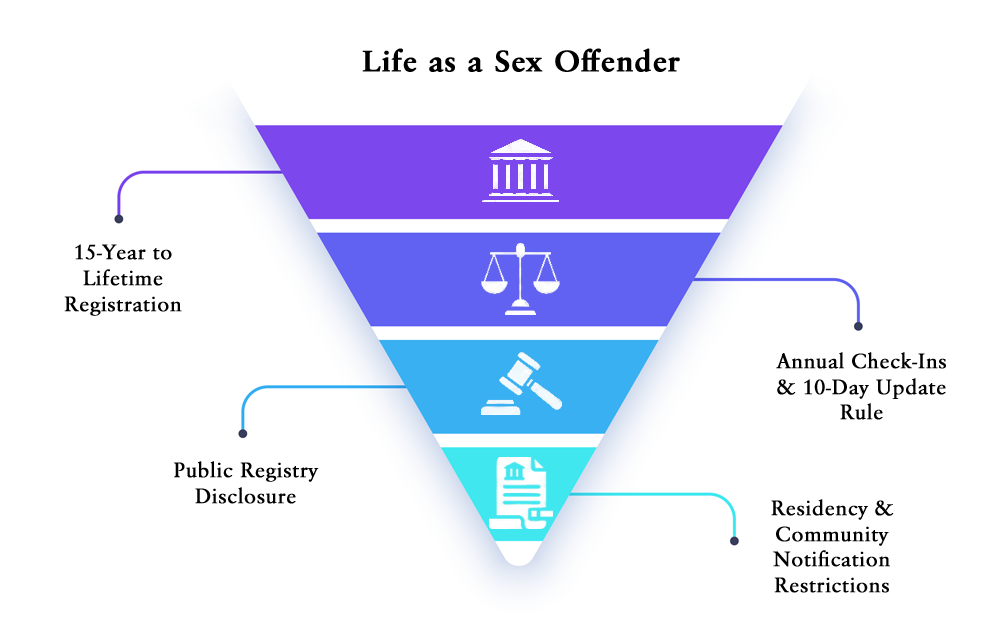
In Wisconsin, being convicted of third-degree sexual assault means you are legally required to sign up for the Wisconsin Sex Offender Registry. This is not just a one-time bit of paperwork. It is a long-term commitment that usually lasts for at least 15 years after you have finished your entire prison and supervision sentence. In some cases, such as if a person has multiple convictions, this requirement can last for the rest of their life. You are required to check in with the Department of Corrections once a year to update your photo and confirm where you live and work. If you move, change your job, or even get a new phone number or car, you must report that change within 10 days, or you could face a new felony charge for failure to register.
The registry is also a public tool, meaning your name, photo, home address, and conviction details are posted on a website that anyone can search. While the state law itself doesn’t always specify exactly where you can live, many Wisconsin cities and towns have their own residency restrictions. These local rules often prevent registered offenders from living within a certain distance of schools, parks, or daycare centers. Additionally, the police may notify your neighbors or the local community if they believe it is necessary for public safety.
Third-Degree Sexual Assault and Domestic Abuse
When third-degree sexual assault involves people in a close relationship, such as a spouse, former spouse, cohabitant, or someone with whom you have a child, it triggers Wisconsin’s domestic abuse penalty enhancer. This designation changes how law enforcement and the courts handle the case.
Wisconsin operates under a mandatory arrest law. If law enforcement has probable cause to believe a domestic sexual assault occurred, identifies a predominant aggressor, and reasonably believes continued domestic abuse is likely, officers are legally required to make an arrest. They cannot simply issue a warning or leave it up to the victim to decide whether charges should be filed.
Consider a hypothetical scenario in which a couple is going through a bitter divorce but is still living together. After a non-consensual sexual encounter, one spouse calls the police. Even if the reporting party changes their mind an hour later and begs officers not to arrest their spouse, the police must make an arrest if they determine there is probable cause and identify that spouse as the predominant aggressor. The decision to prosecute belongs to the State of Wisconsin, not the alleged victim.
Once an arrest is made, an automatic 72-hour no-contact restriction immediately takes effect. While the law allows an alleged victim to sign a formal written waiver to lift this restriction early, it remains strictly in place unless that waiver is signed. Furthermore, once the arrested individual appears before a judge and formal bond conditions are set, those court orders override the 72-hour window and can only be modified by the judge, not the victim. During the no-contact period, the arrested person is prohibited from calling, texting, emailing, visiting, or otherwise contacting the alleged victim. Violating this restriction is a separate criminal offense that can result in immediate re-arrest and additional criminal charges.
In another hypothetical example, imagine an individual is arrested and released on bond the following morning. Desperate to apologize and smooth things over, they send a text message to their partner that says, “I’m so sorry. Let’s talk.” Even though the message contains no threats, it still violates the 72-hour no-contact restriction. As a result, the individual can be immediately re-arrested and charged with a separate criminal offense, regardless of what ultimately happens with the original sexual assault allegation.
If a person is convicted of third-degree sexual assault with the domestic abuse enhancer, the domestic abuse designation carries additional consequences beyond the standard felony penalties. The court must impose a mandatory $100 domestic abuse surcharge to help fund local domestic violence programs. In addition, because this is a felony conviction, the individual faces a lifetime prohibition on owning or possessing firearms under Wisconsin law, a restriction that is doubly reinforced under federal law because the conviction qualifies as a misdemeanor or felony crime of domestic violence.
For example, consider a hypothetical involving an avid hunter who is convicted of third-degree sexual assault with the domestic abuse enhancer. Because the conviction is a felony, they permanently lose their right to possess firearms. They can no longer legally purchase a hunting rifle, keep a handgun for self-defense, or possess even a single round of ammunition for the rest of their life.
While third-degree sexual assault is already a serious Class G felony punishable by up to 10 years in prison, the domestic abuse designation places the case on a specialized legal path designed to provide immediate protection for the alleged victim while imposing additional legal consequences on the accused.
Sex Offender Counseling and Treatment
If someone is convicted of a felony sexual assault offense, completing a specialized sex offender treatment program is almost always a mandated condition of their sentence or supervision.
For example, imagine a person is sentenced to eight years in state prison after being convicted of first-degree sexual assault. While incarcerated, they will likely be required to participate in a specialized treatment program operated by the Department of Corrections. Because of institutional resource constraints, enrollment is typically prioritized for inmates nearing their release dates. These programs primarily rely on cognitive-behavioral therapy (CBT) and group therapy techniques that help participants identify and change the cognitive distortions, beliefs, and behaviors that contributed to the offense. In jurisdictions with discretionary parole or earned-time incentives, successfully completing this treatment is an important factor when prison officials or parole boards determine whether the inmate is eligible for early release. Conversely, refusing to participate or failing the program can result in disciplinary action, the loss of good-time credits, or the denial of early release opportunities, forcing the individual to serve their maximum sentence.
Treatment usually continues after incarceration. For example, imagine someone completes a prison sentence and is released on parole or extended supervision, or another individual receives probation instead of prison. In either situation, the court or releasing authority will routinely mandate participation in a certified community-based treatment program. Many jurisdictions manage these offenders using the containment model. Under this multidisciplinary approach, a probation or parole officer, a specialized therapist, and a polygraph examiner work together to share information, monitor the individual’s progress, and enforce compliance with supervision rules. Participants are frequently required to submit to periodic polygraph examinations to verify compliance with supervision rules and address offense-related history. While a failed polygraph test generally cannot be the sole legal basis for revoking supervision because of evidentiary limitations, failing to cooperate with the testing process or confessing to a rule violation during an exam can lead to revocation. The financial burden of this treatment is generally the defendant’s responsibility, with costs typically ranging from $35 to $75 for group sessions and $100 to $150 or more for individual counseling.
Finally, in 20 states and within the federal system, laws allow for the civil commitment of individuals designated as Sexually Violent Predators (SVPs) or Sexually Violent Persons. For example, imagine a person completes a 20-year prison sentence for a qualifying sexual offense. As their release date approaches, prosecutors or state attorneys petition the court to have the individual declared an SVP. If the court or a jury determines the legal and psychological criteria have been met, specifically that the person suffers from a mental abnormality or personality disorder that makes them likely to engage in future acts of sexual violence, the individual is transferred to a secure mental health treatment facility instead of being released into the community. Under U.S. Supreme Court precedent, civil commitment is a separate civil proceeding rather than an additional criminal sentence. It results in confinement for an indefinite period until the individual is legally determined to no longer meet the standard for commitment.
Restitution
Restitution is a court order that requires a person convicted of third-degree sexual assault to pay the victim back for any financial losses caused by the crime. Unlike a fine, which is paid to the government as a punishment, restitution is paid directly to the victim to help make them whole again. A judge will typically order the defendant to cover the victim’s out-of-pocket expenses, such as hospital medical bills, the cost of long-term therapy or counseling, and any wages the victim lost because they had to miss work. It can even cover the cost of changing locks or moving if the victim no longer feels safe in their home.
The process for determining the amount usually occurs during sentencing, when the victim provides receipts or other documents showing what they spent. While the judge will consider the defendant’s ability to pay, restitution is the highest priority payment in the Wisconsin legal system. This means that any money the defendant pays toward their court obligations must be paid to the victim before it can be used to pay DNA fees, court costs, or fines. If the full amount isn’t paid by the time the person finishes their prison or probation sentence, the debt can be turned into a civil judgment. This allows the victim to take further legal action, such as garnishing the person’s future paychecks, and, notably, this type of debt usually cannot be wiped away by filing for bankruptcy.
Potential Legal Defenses to Third-Degree Sexual Assault Charges in Wisconsin
In Wisconsin, third-degree sexual assault is a Class G felony defined as engaging in sexual intercourse with another person without that person’s consent, or engaging in sexual contact without consent that involves penile ejaculation or the emission of urine or feces onto the victim. Because the penalties are severe, including up to 10 years in prison and mandatory sex offender registration, developing an effective defense strategy is critical. The most common legal defenses focus on challenging the sufficiency of the prosecution’s evidence, exposing false allegations, and demonstrating that consent was communicated through words or overt actions.
Challenging the Sufficiency and Reliability of the Evidence
The baseline defense in any criminal prosecution is that the state cannot prove every element of the offense beyond a reasonable doubt. The burden of proof rests entirely on the government. If the evidence is weak, contradictory, or incomplete, the defendant must be found not guilty.
A defense attorney will carefully examine the state’s case for a lack of physical or forensic evidence, inconsistent witness statements, or deficiencies in the police investigation. For example, if an alleged sexual assault is not reported until weeks after it supposedly occurred, physical evidence may no longer exist. If the case relies entirely on the complaining witness’s testimony, and the defense presents independent witnesses, digital evidence, or timelines that contradict key parts of the accusation, the state may fail to meet its burden of proof.
False Allegations and Credibility Challenges
Although a false accusation is not a separate legal defense under Wisconsin law, showing that an allegation is fabricated or unreliable can create reasonable doubt. Defense attorneys thoroughly investigate the complaining witness’s credibility, prior statements, and possible motives for making the accusation.
Common motives may include jealousy, revenge, divorce or child custody disputes, relationship conflicts, or attempts to avoid personal or social consequences. The defense may also compare statements made to police officers, medical providers, friends, and family members to identify inconsistencies.
For example, imagine a couple involved in a contentious custody dispute. After an argument, one parent accuses the other of sexual assault. During the investigation, the defense discovers text messages sent shortly before the allegation threatening to “ruin” the defendant’s life. While this evidence alone does not prove the accusation is false, it may significantly undermine the witness’s credibility and create reasonable doubt.
Consent Under Wisconsin Law
Under Wisconsin law, consent is strictly defined. Legal consent requires words or overt actions indicating a freely given, present agreement to engage in the specific sexual intercourse or sexual contact. Silence, a failure to physically resist, or a current or past dating or marital relationship does not constitute legal consent.
Wisconsin also does not recognize a reasonable mistake of fact defense regarding consent. The prosecution does not have to prove that the defendant knew the other person was not consenting. Instead, the issue is whether the alleged victim actually gave consent through clear words or actions. If there was no actual consent, a defendant’s honest or even reasonable misunderstanding is generally not a legal defense.
Accordingly, a defense based on consent must rely on evidence showing that consent was actually communicated. This evidence may include text messages, recordings, witness testimony, or the conduct of both parties before and after the encounter.
Possibility of Reducing the Charges for Fourth Degree Sexual Assault
Although third-degree sexual assault is a serious Class G felony in Wisconsin, prosecutors may agree to reduce the charge through plea negotiations when the defense exposes significant weaknesses in the state’s case. Whether a reduction is possible depends on the specific facts, the strength of the evidence, the defendant’s criminal history, the wishes of the alleged victim, and the prosecutor’s willingness to negotiate. While every case is different, some of the more common reduced charges include:
Fourth-Degree Sexual Assault (Class A misdemeanor). Fourth-degree sexual assault is a Class A misdemeanor that involves non-consensual sexual contact but does not require proof of sexual intercourse. For example, imagine the prosecution has difficulty proving that sexual intercourse occurred but believes it can establish that unwanted sexual touching took place. Rather than risk losing at trial, the prosecution and defense may agree to reduce the felony third-degree sexual assault charge to misdemeanor fourth-degree sexual assault.
Misdemeanor Battery (Class A misdemeanor). Under Wisconsin law, simple battery requires that a person intentionally causes bodily harm, defined by statute as physical pain, injury, illness, or physical impairment, to another person without that person’s consent. For example, imagine a dating couple gets into an argument, and the evidence supporting the sexual assault allegation is weak, but witnesses or physical evidence establish that the defendant intentionally shoved or struck the other person, causing physical pain or minor injury. In that situation, the prosecution and defense may negotiate a reduction from felony sexual assault to misdemeanor battery.
Disorderly Conduct (Class B misdemeanor). Disorderly conduct is a Class B misdemeanor that prohibits violent, abusive, indecent, profane, boisterous, unreasonably loud, or otherwise disorderly behavior that tends to cause or provoke a disturbance. For example, imagine prosecutors determine they cannot prove the elements of third-degree sexual assault beyond a reasonable doubt, but the evidence shows the defendant engaged in disruptive or inappropriate conduct during the incident. Rather than risk an acquittal at trial, the prosecution and defense may agree to resolve the case with a plea to disorderly conduct.
Charge reductions are most likely when witness statements are inconsistent, forensic evidence is lacking, credibility issues arise, or the prosecution has difficulty proving one or more elements of the offense beyond a reasonable doubt, particularly the absence of consent. A negotiated reduction to a misdemeanor or a non-sexual offense can substantially reduce the potential penalties. Furthermore, while a felony third-degree sexual assault conviction carries mandatory sex offender registration, a reduction eliminates mandatory registration. Depending on the final charge, it either avoids the registry entirely, as with battery or disorderly conduct, or, if reduced to fourth-degree sexual assault, changes registration from a mandatory requirement to a discretionary decision made by the sentencing judge after considering the relevant statutory factors and the interests of public safety.
 Preparing to Win Your Third-Degree Sexual Assault Case
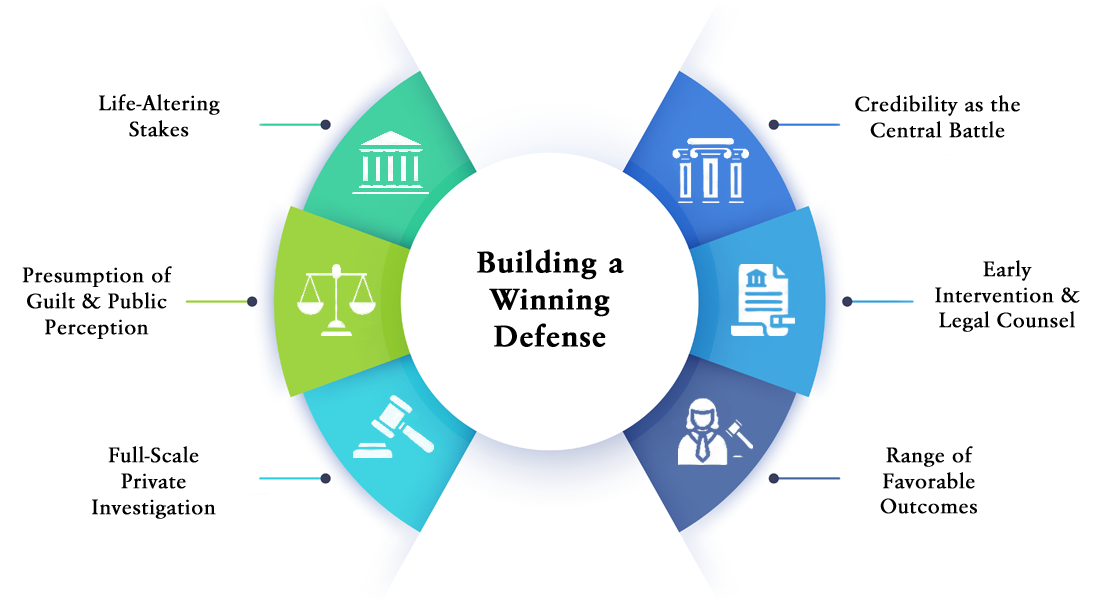
A Third-Degree Sexual Assault charge is one of the most serious criminal accusations a person can face. In Wisconsin, it is a Class G felony punishable by years in prison, substantial fines, and mandatory lifetime sex offender registration upon conviction. Beyond the courtroom, a felony conviction can permanently affect your employment opportunities, professional licenses, housing, education, firearm rights, immigration status, and reputation. Even an accusation alone can damage relationships, careers, and standing within the community long before your case is ever decided.
Unfortunately, allegations of sexual assault often come with a built-in presumption of guilt in the eyes of the public. Prosecutors understand the emotional nature of these cases and frequently present the evidence in a way designed to portray the accused as dangerous or predatory. Successfully defending against these allegations requires far more than simply denying the accusations. It requires an aggressive, strategic, and thoroughly prepared defense from the very beginning.
At Tracey Wood & Associates, that preparation starts immediately. The firm launches a full-scale private investigation on behalf of every client rather than relying solely on the government’s investigation. The defense team interviews witnesses, secures surveillance video before it is lost, obtains phone records and electronic communications, reviews text messages, emails, and social media posts, analyzes police reports and forensic evidence, consults with experts when appropriate, and uncovers facts that law enforcement may have overlooked. Every piece of evidence is carefully examined for inconsistencies, credibility issues, and opportunities to challenge the prosecution’s case.
Many Third-Degree Sexual Assault prosecutions are not won or lost because of DNA or other forensic evidence. Instead, they often turn on credibility. The central question is frequently whose version of events the jury believes. The defense carefully examines inconsistent statements, motives to fabricate, conflicting witness accounts, prior communications between the parties, and other evidence that may establish consent, expose false allegations, demonstrate a misunderstanding, or create reasonable doubt.
Early intervention can make a significant difference. If investigators contact you and ask you to answer questions or come to the police station, you should consult an experienced criminal defense attorney before making any statement. Charges may not yet have been filed, and statements made during the investigation often become some of the prosecution’s strongest evidence. Having legal counsel involved at the earliest stage helps protect your constitutional rights and can influence how the investigation and charging decision ultimately unfold.
Successfully defending a Third-Degree Sexual Assault charge is rarely the result of luck. It comes from meticulous preparation, an independent investigation, careful analysis of every piece of evidence, and the ability to expose weaknesses in the State’s case. Depending on the facts, the best possible outcome may involve convincing prosecutors not to file charges, obtaining a dismissal, negotiating a reduction to a lesser offense when appropriate, or securing a not guilty verdict at trial.
Schedule a Free Case Evaluation
Tracey Wood & Associates offers free and confidential case evaluations for individuals facing Third-Degree Sexual Assault charges throughout Wisconsin. During your consultation, you can discuss the facts of your case, learn about potential defenses, understand the serious consequences of a felony conviction, and begin developing a strategy to protect your freedom, your reputation, and your future. The consultation is protected by attorney-client privilege, carries no obligation, and gives you the opportunity to work with a defense team committed to pursuing the best possible outcome for your case.
Call (608) 490-5779 or Schedule a Free Case Evaluation Online
Contact Us
Footer
Locations
Headquarters, Main Office, and Mailing Address
Tracey Wood & Associates
6605 University Avenue
Suite 101
Middleton, WI 53562
Downtown Office

Tracey Wood & Associates
345 West Washington Avenue
Suite 328
Madison, WI 53703
Tracey Wood & Associates
6605 University Avenue
Suite 101
Middleton, WI 53562
Downtown Office
Tracey Wood & Associates
345 West Washington Avenue
Suite 328
Madison, WI 53703