
Miranda Warning Wisconsin
Estimated Read Time: 8-9 Minutes
 Key Takeaways:
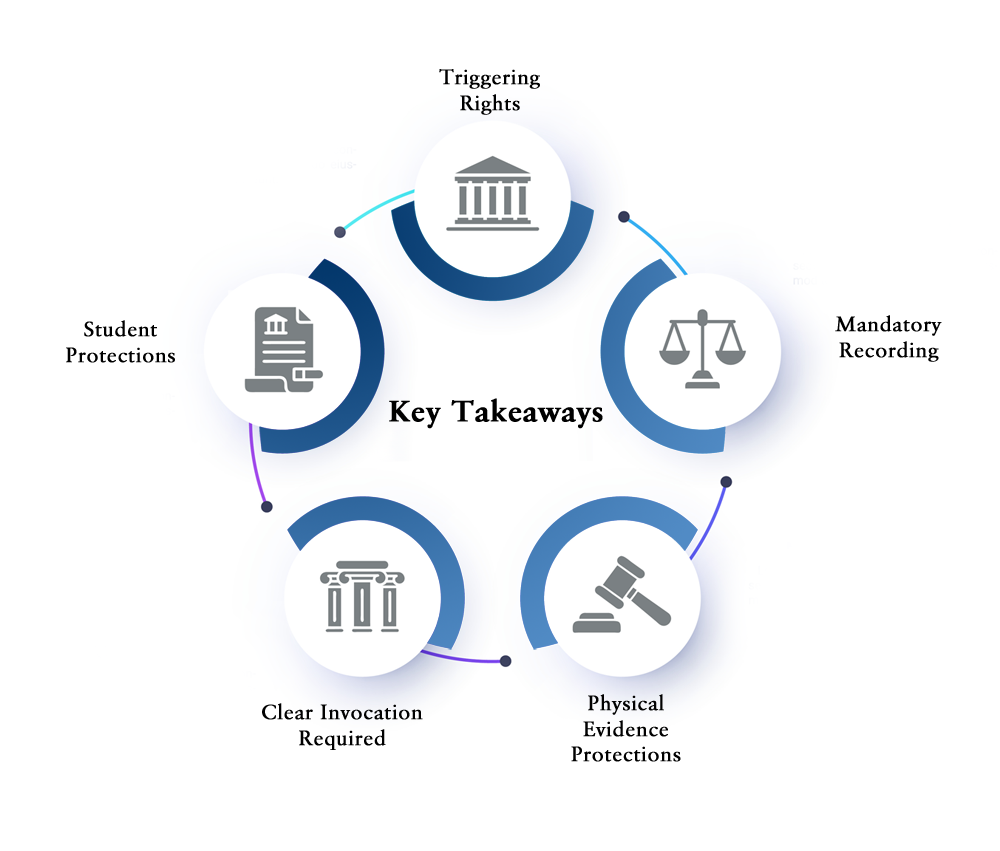
Triggering Rights: Miranda rights are triggered only when a person is subject to custodial interrogation. This means the person is in custody (i.e., a reasonable person would not feel free to leave) and is being questioned by law enforcement. While people often ask, ‘Am I being detained?’ to clarify their freedom of movement, a brief detention, such as a traffic stop, does not always require Miranda warnings unless a formal arrest or interrogation begins.
Mandatory Recording: Wisconsin law generally requires police to record the entire interrogation for felony offenses and mandates recording for every single interrogation involving a child, regardless of the crime’s severity.
Physical Evidence Protections: Unlike many other states, Wisconsin can throw out physical evidence like weapons or drugs if a police officer intentionally ignores your Miranda rights to find those items.
Clear Invocation Required: To stop a police interrogation, you must clearly and directly state that you are invoking your rights, as simply staying silent or using ambiguous phrases is not enough.
Student Protections: A March 2026 Wisconsin Supreme Court decision requires that police read K-12 students their Miranda rights before any interrogation begins in a school setting.
Not Read Miranda Warning or Miranda Missteps
More often than many people realize, evidence can be suppressed when law enforcement officers fail to properly administer Miranda warnings or do not follow correct investigative procedures. Even small mistakes, missteps, or violations of constitutional rights can sometimes result in important evidence being excluded from court. When key evidence is suppressed, it can significantly strengthen the defense and potentially lead to reduced charges, dismissals, or better overall case outcomes.
Under Wisconsin law, Wis. Stat. § 971.30 pertains to the requirement of giving a Miranda warning, which informs individuals in police custody of their constitutional rights, including the right to remain silent and the right to an attorney, before custodial interrogation. If law enforcement officers fail to properly provide these warnings during questioning while a person is in custody, any resulting incriminating statements may potentially be ruled inadmissible and excluded from evidence in court.
These rights are extremely important, and every citizen should understand how to use them to their advantage. One of the hardest things for many people to understand is that, in many situations, law enforcement has already decided they are going to make an arrest, and there is often little chance of talking your way out of it. Instead of trying to justify or explain yourself during questioning, it is often better to understand your constitutional rights and use them strategically to help achieve the best possible outcome after an arrest and release from jail.
Miranda Rights Versus Miranda Warning
Although most people commonly refer to them as “Miranda rights,” the proper legal term is the “Miranda warning,” because law enforcement is required to warn individuals of these constitutional rights before custodial interrogation.
Apply the Miranda Warning to your advantage.
1) Everyone has the right to remain silent.
Once police stop you, they have already formed certain assumptions. You have the right not to incriminate yourself by making statements that could later be used against you. Any statements you make may later be brought up in court, so it is often to your advantage to say very little beyond identifying yourself and providing documentation such as your ID.
For example, during an OWI stop, an officer may already smell alcohol and suspect impairment before even asking the driver out of the vehicle. At that point, many people try to explain themselves by saying things like, “I only had two beers,” “I’m just tired,” or “I drank earlier.” Those statements can later be used by the prosecution as evidence. Even seemingly harmless comments may be interpreted against you in court. Remaining respectful while exercising your right to remain silent can help prevent you from unintentionally providing additional evidence against yourself. Additionally, remaining silent can help your attorney because there are fewer statements and explanations for the defense to later address, challenge, or work around in court.
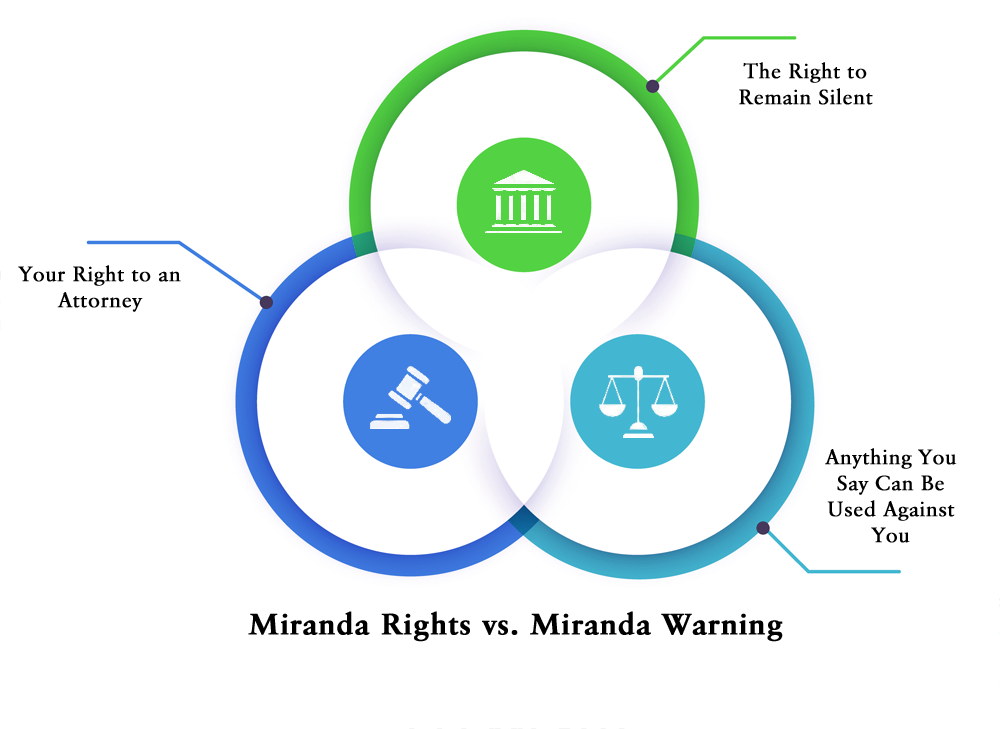 2) Anything you say to law enforcement can and will be used against you in a court of law.
Anything you say to law enforcement can and will be used against you in a court of law. This protection is rooted in your constitutional rights against self-incrimination under the Fifth Amendment, which helps protect citizens from being forced to provide evidence against themselves during a criminal investigation. Even statements that seem harmless, innocent, or explanatory in the moment can later be used by the prosecution to support criminal charges or challenge your credibility. Many people believe they can “clear things up” by continuing to talk, but small inconsistencies, guesses, or emotional statements are often taken out of context and introduced as evidence later in court.
For example, in a family violence investigation, emotions are often running high when police arrive. A person may try to calm the situation by saying something like, “We were both yelling,” “I barely touched her,” or “I just pushed him away.” Even if the person was acting in self-defense or trying to explain the situation, those statements can later be used by prosecutors as admissions in court.
Remember, your interaction with police is not a preliminary day in court where you must justify, explain, or defend your actions in the moment. The investigation is only beginning, and anything you say can later become part of the evidence used against you. Remaining respectful while exercising your right to remain silent can help protect both you and your legal defense moving forward.
3) You legally have the right to an attorney. If you cannot afford an attorney, one will be provided for you.
Even if you have not done anything wrong, you are legally entitled to representation when being questioned by law enforcement. Asking for an attorney can help protect your rights and ensure that you are not facing the legal system alone. If you wish to exercise this right, calmly and politely state that you would like to speak with a lawyer before answering any further questions.
In many ways, requesting an attorney is like putting up a legal shield to help protect your rights, prevent misunderstandings, and ensure that questioning is conducted fairly.
In the United States, you not only have the right to an attorney, but if you cannot afford one, a public defender may be appointed to represent you at no cost to provide legal counsel and protect your rights.
Miranda Rights exist to protect you from being pressured into speaking while in police custody. Wisconsin anchors these protections in Article I, Section 8 of its Constitution, which clearly states that you cannot be forced to testify against yourself. Even though the familiar Miranda warning is not an exact verbatim statement in one statute, laws such as Wis. Stat. §§ 967.045, 968.073, and 938.195 establish the rules for how statements are collected and used in court.
The big picture is that these rights ensure you are treated fairly during a police investigation. One of the most important rules in Wisconsin is that if you are being questioned for a serious crime, such as a felony, the police are generally required to record the entire conversation. This is important to know because if they don’t, a jury might be told they can’t trust what you supposedly said. Furthermore, Wisconsin is stricter than many other states. If a police officer intentionally ignores your rights to obtain physical evidence, such as a weapon or drugs, that evidence can be thrown out entirely. Ultimately, these rights mean that if the police don’t follow the rules, the things you say or the evidence they find often cannot be used to convict you.
For example, imagine John is walking down the street in Milwaukee when police stop him because he matches the description of someone who just robbed a store. The officers handcuff him, put him in the back of a police car, and take him to the station for questioning. At this point, John is considered to be in custody because he is not free to leave. Once at the station, a detective starts asking John specific questions about where he was and what he was doing during the robbery. This is an interrogation.
If the detective fails to read John his Miranda Rights before this questioning begins, any incriminating statements John makes, such as “I was near that store, but I didn’t mean to take anything,” generally cannot be used against him as direct evidence in court. These statements are considered inadmissible because they were obtained in violation of his constitutional protections. Furthermore, if John was being questioned for a felony and the police failed to record the session, a judge or jury might be instructed to view the detective’s version of John’s confession with extreme skepticism. Even if the police found a stolen item because of what John said, state law suggests that if the officers intentionally ignored John’s rights to find that item, that physical evidence could also be potentially thrown out of the case.
The Mandatory Warning Elements
The mandatory parts of a Miranda warning ensure you know your rights before the police start questioning you while you are in custody. First, an officer must tell you that you have the right to remain silent, meaning you do not have to answer any questions. Second, they must warn you that anything you do say can and will be used as evidence against you in court. Third, they have to let you know that you have the right to a lawyer and can have that lawyer with you during any questioning. Finally, if you cannot afford a lawyer, they must tell you that one will be provided for you at no cost.
In Wisconsin, these rules have a few extra teeth to ensure police follow the letter of the law. For example, if the police are questioning you about a serious crime, they are usually required to record the entire conversation, including the part where they read you these rights. Also, the courts are very strict about how you can use these rights. For example, if you want to stop the questioning, you have to say so clearly and directly, rather than just staying quiet. These protections are guaranteed by the Wisconsin Constitution, which ensures that no one is forced to give evidence that could be used to convict them.
The Fifth Warning in Wisconsin
The fifth warning is an extra step police often take in Wisconsin to make sure you fully understand that you are in control of the conversation. While the law technically only requires four main warnings, such as the right to remain silent and the right to a lawyer, Wisconsin officers usually add a fifth statement. They say: “You can decide at any time to exercise these rights and not answer any questions or make any statements.” This is followed by a question about whether you understand your rights and whether you still want to talk. The goal is to prove to a judge later that you weren’t tricked or forced into speaking, but that you knew exactly what you were doing when you agreed to the interview.
This additional warning has significant implications, given how the state’s legal system operates. Since state law requires that interrogations be recorded, capturing this fifth warning on tape can help show the court that the police were being fair. Think of this as the police putting the ball in your court. If you want to stop questioning, you have to say so directly. The fifth warning emphasizes that you are free to stop the interview at any time, as long as you speak up and say so. This ensures that any statement you give is truly voluntary.
Mandatory Recording of Interrogations
Miranda rights and the mandatory recording of interrogations work together to make sure that anything you say to the police is fair and accurate. According to state law, you have the right to remain silent and to have a lawyer, but these rights only kick in once you are in custody and being questioned. Once questioning over a felony begins, the police must record the conversation using either audio or video equipment. This is also true in cases where the police are questioning a child, though in that case, the law requires them to record the interview, no matter how minor the crime.
The critical implication of these rules is that they provide a record of what actually happened during your arrest. If the police do not record a felony interrogation without an exceptionally good reason, a judge can give the jury a special instruction to be extra careful when considering the reliability of your statement. These recording laws are meant to prevent the police from misquoting you or pressuring you in secret. These protections ensure that your statements are only used in court if the police followed the proper steps and kept an honest record of the interaction.
 Physical Evidence
Wisconsin has very strict rules about how Miranda rights affect physical evidence. In many other states, if you aren’t read your rights and you tell the police where a weapon or stolen property is hidden, the police can still use that weapon as evidence in court even if they can’t use your spoken words. However, the Wisconsin Supreme Court ruled in the famous 2005 case State v. Knapp that state laws provide greater protection. If a Wisconsin police officer intentionally breaks the Miranda rules just to find physical evidence, that evidence is poisoned and usually cannot be used against you in a trial.
The goal of these protections is to discourage police from taking shortcuts. If the court decides an officer purposely ignored your right to remain silent to get their hands-on physical proof, they can potentially exclude it to protect your constitutional rights.
There is one major exception called inevitable discovery. This means that if the prosecutor can prove that the police would have found the evidence anyway through a legal search, it might still be admissible in court. For example, if they were already getting a search warrant for that area and thus would have found the evidence on their own, this would be considered inevitable discovery. These rules are in place so that the police cannot profit from intentionally violating your rights to gather physical evidence.
Juvenile Protections
Wisconsin has special rules to protect anyone under 18 when police question them, but they differ from what you might expect. While children have the same right to remain silent as adults, Wisconsin law goes a step further. Police must record every single interrogation of a child, whether they are suspected of a minor misdemeanor or a serious felony. If the police do not record the conversation, anything the child says usually cannot be used against them in court. This recording rule came from another 2005 Wisconsin Supreme Court Case, State v. Jerrell C.J., which held that recording is the only way to ensure a child is not being pressured or confused.
This means that if you are a parent of a child in custody, the police must try to notify you immediately when your child is arrested, but the law does not strictly require a parent to be in the room for a child to waive their Miranda rights. Instead, a judge will look at the totality of the circumstances, such as the child’s age and intelligence, to decide if they truly understood what they were doing. Because of this, the mandatory recording serves as an added safety net, allowing a judge to watch the video and see for themselves whether the child was treated fairly. These protections help ensure that a juvenile’s statement is used only if it was given freely and recorded honestly.
A recent Wisconsin Supreme Court decision has added further protections to minors being questioned in a school setting. The March 2026 decision stated that police must read students K-12 their Miranda rights before any interrogation begins.
When Miranda Rights are Triggered
Miranda rights only kick in when two specific things happen at the same time: you are being interrogated while in custody. Under Wisconsin law, being in custody means that a reasonable person in your situation would not feel free to leave or end the conversation. This does not always mean you are in handcuffs. For example, if the police have significantly restricted your movement, you are likely in custody. The second part, interrogation, happens when an officer asks you direct questions or does something they know will probably make you say something incriminating or revealing to their investigation.
It is important to know that this means that if you aren’t in custody, such as during a traffic stop or when casually chatting on the sidewalk, law enforcement officers are not under any obligation to read you your rights, which means that anything you can say can be used against you. This extends to situations such as being in the back of a police car, where you are in custody, but official questioning has not begun. If you confess or say something incriminating without being prompted, it can be used against you since your situation does not trigger your Miranda rights unless you are being officially interrogated while you are in custody.
Invoking Miranda Rights
Miranda rights are also something you can invoke to protect yourself. Simply staying quiet is not enough to trigger your right to remain silent. Instead, you must actually say a clear statement, such as “I am invoking my right to remain silent,” or, if the questioning has already begun, “I do not want to talk anymore.”
The same rule applies when initiating your right to an attorney. You must be clear in your statement, as any ambiguity means the police do not have to stop the interrogation. For example, saying something like “I think I might need a lawyer” is not clear enough. Instead, you should say something such as “I want an attorney now.”
If you aren’t crystal clear, Wisconsin law generally allows the police to keep asking you questions, and any answers you give can be used against you in court. However, since police are required to record interrogations for felony offenses, there will be a recording of exactly what you said. If you clearly asked to stop and the police kept going, your lawyer can use that recording to ask a judge to potentially exclude your statements. Once you clearly ask for a lawyer, the police must honor that request and stop all questioning until your counsel is present.
FAQs
Does my case get automatically dismissed if the police forgot to read me my Miranda rights? No, the case isn’t automatically dismissed. Instead, any statements you made usually cannot be used as evidence, though the prosecutor can still try to prove the case with other evidence, such as witnesses or DNA.
Can the police use physical evidence they found because of a statement I made without my rights being read? In Wisconsin, if a judge finds that an officer intentionally skipped your Miranda rights to find physical evidence, that evidence can potentially be poisoned and can be suppressed.
Do my parents have to be in the room for me to be questioned if I am a juvenile? While police must try to notify your parents as soon as possible, Wisconsin law does not strictly require a parent to be present for a child to waive their rights and speak to the police.
Is it true that all police questioning in Wisconsin must be recorded? Police are only legally required to record custodial interrogations for felonies. Juvenile recording is also a common practice.
Can I just stay silent to invoke my Miranda rights? It is best to voice it. Clearly and directly state that you are invoking your right to remain silent in a kind and objective manner.
Investigating Miranda Rights Violations
A defense lawyer can act like a detective to find the exact moment the police were supposed to read you your rights. Since your rights only protect you during a custodial interrogation, an attorney will be on the lookout for two specific things. First, they check if you were in custody, which means a reasonable person in your shoes wouldn’t have felt free to leave. This could be because you were in handcuffs, but it could also be because you were in a small room at the station or because the police took your car keys and ID and wouldn’t give them back.
Second, the lawyer looks for the interrogation, which is any questioning or behavior by the police meant to get you to talk. This can also include functional equivalents, like an officer making a guilt-tripping comment just to see if you’ll respond. The big implication here is that if your lawyer can prove you were both in custody and interrogated without being read your rights, they can ask a judge to throw out your statements. Thanks to the statutes that require police to record serious investigations, your lawyer can watch the video to see if the police report matches what actually happened. If the video shows the police pressured you while you weren’t free to go, your lawyer has potential material they need to protect your rights in court.
Motion to Suppress
Drafting a motion to suppress is when a defense attorney writes a formal letter to the judge explaining why the police broke the rules and asking to have your statements thrown out of court. This process allows a lawyer to challenge evidence before a trial even starts. The goal is to prove that the police ignored your rights, which say you cannot be forced to give evidence against yourself. If the lawyer is successful, the prosecutor won’t be allowed to show the jury what you said or, in some cases, any physical evidence that the police found because of your statement.
The biggest implication for your case is that this motion gives the judge a clear roadmap showing where law enforcement may have violated your rights or failed to follow proper legal procedures. For example, if police were investigating a felony but failed to properly record the interrogation, your attorney can point out that violation and explain why it matters. Your lawyer may also argue that if an officer intentionally avoided reading your Miranda rights in order to obtain physical evidence, that evidence may be considered unlawfully obtained and should be excluded from the case. Even if the judge does not suppress all of the evidence, filing a strong, well-supported motion can place significant pressure on the prosecution and create leverage for negotiations that could potentially lead to reduced charges, suppressed evidence, or even a complete dismissal of the case.
Suppression Hearings
A suppression hearing, which can also be called a Goodman hearing in Wisconsin, is like a mini trial that happens before your actual criminal trial. The only goal is for a judge to decide if the police followed the rules when they questioned you. Under the Wisconsin Constitution, you have the right to remain silent, and this hearing is where your lawyer tries to prove the police ignored that right. This process allows your defense to challenge any evidence they think was gathered illegally. If the judge agrees with your lawyer, the prosecutor is banned from using your statements, or even some physical evidence, when the real trial begins.
During a suppression hearing, police officers must testify under oath about what happened. Your lawyer will then use the mandatory recording to see if the officers are telling the truth. If the video shows you clearly asked for a lawyer or tried to remain silent, but the police kept pushing you to talk, the judge can exclude statements. It is the prosecutor’s job to prove you spoke to the police willingly. If they can’t prove the police followed the law, the exclusion of evidence often makes the prosecutor’s case so weak that they might have to lower your charges or drop the case entirely.
 Constitutional Violations
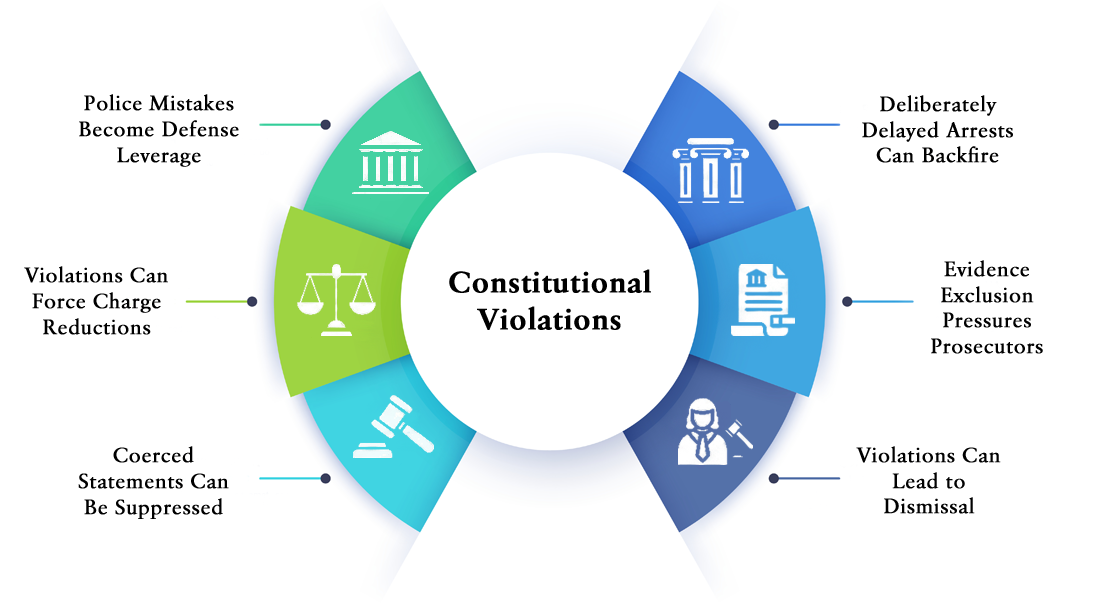
A defense lawyer can strategically leverage police mistakes to help negotiate a better outcome or even get the case dismissed entirely. If your lawyer discovers that law enforcement violated your constitutional rights, that issue can become a powerful point of leverage in negotiations with the prosecutor. Prosecutors know that if the police failed to follow proper legal procedures, a judge may suppress important evidence, including statements, confessions, or physical evidence gathered during the investigation. Because of that risk, prosecutors are often more willing to reduce charges, such as lowering a felony to a misdemeanor, rather than risk losing the case altogether at trial.
This strategy places pressure on the prosecution to carefully evaluate the weaknesses in their case. For example, imagine a young man named Tyler who is taken into custody and questioned for hours without being properly advised of his Miranda rights. During the interrogation, officers use verbal judo techniques, building psychological pressure, minimizing the seriousness of the situation, and making statements designed to get him talking without fully understanding his right to remain silent. Tyler may eventually begin explaining what happened, believing cooperation will help him go home. If his attorney can show that the questioning crossed constitutional boundaries or that Tyler’s statements were not truly voluntary, the court may suppress those statements from evidence.
In another example, imagine a young woman named Emily who officers strongly suspect committed a crime. Instead of formally arresting her and immediately reading her Miranda rights, officers intentionally delay the arrest in order to continue gathering information from her. They may speak casually with Emily, tell her she is “not under arrest,” or continue asking questions while quietly building their case. Believing she can explain herself out of the situation, Emily continues talking and unknowingly provides incriminating details. If her attorney can demonstrate that law enforcement deliberately delayed the arrest or Miranda warnings to obtain those statements, a judge may determine that portions of the interview or resulting evidence should be excluded.
If key evidence is at risk of being thrown out, prosecutors are often far more willing to negotiate a favorable plea agreement rather than risk dismissal or acquittal at trial. Ultimately, by exposing mistakes in how the investigation was handled or how Miranda rights were administered, a defense lawyer can potentially transform a constitutional violation into a significant strategic advantage that may lead to reduced charges, suppressed evidence, or a much better overall outcome in the case.
Scheduling a Free Case Evaluation
The most damaging aspect of a criminal case is often the gap between what is happening and what is understood. Tracey Wood and Associates can help to close that gap immediately with a free, no-obligation case evaluation designed to bring clarity and control back to the individual.
After an arrest or investigation, individuals are often left without a clear understanding of the process, the risks, or their options. This consultation fills that void. In a confidential environment, individuals can present their side of the story, ask direct questions, and receive clear, experience-based answers.
At the same time, the defense team begins documenting the case, preserving time-sensitive evidence, and analyzing the prosecution’s position for weaknesses such as inconsistencies, procedural errors, or constitutional violations.
This early alignment of information and strategy creates direction, and a robust defense approach can begin to take shape with the goal of dismissal, reduced charges, or acquittal. With no cost and no pressure, the evaluation replaces confusion with clarity and enables confident decision-making.
Call (608) 490-5779 or Schedule a Free Case Evaluation Online
Contact Us
Footer
Locations
Headquarters, Main Office, and Mailing Address
Tracey Wood & Associates
6605 University Avenue
Suite 101
Middleton, WI 53562
Downtown Office

Tracey Wood & Associates
345 West Washington Avenue
Suite 328
Madison, WI 53703
Tracey Wood & Associates
6605 University Avenue
Suite 101
Middleton, WI 53562
Downtown Office
Tracey Wood & Associates
345 West Washington Avenue
Suite 328
Madison, WI 53703